Semi-precious · Quartz
Citrine
Guide.
Citrine can be an excellent choice for a custom ring or fine-jewelry piece when its color, cut, care needs, and setting match the way you plan to wear it. Citrine is quartz with a Mohs hardness of 7 and is a practical choice for regular wear when protected from hard knocks. The best citrine is not simply the rarest one; it is the stone whose visible character, documentation, and design fit your priorities.
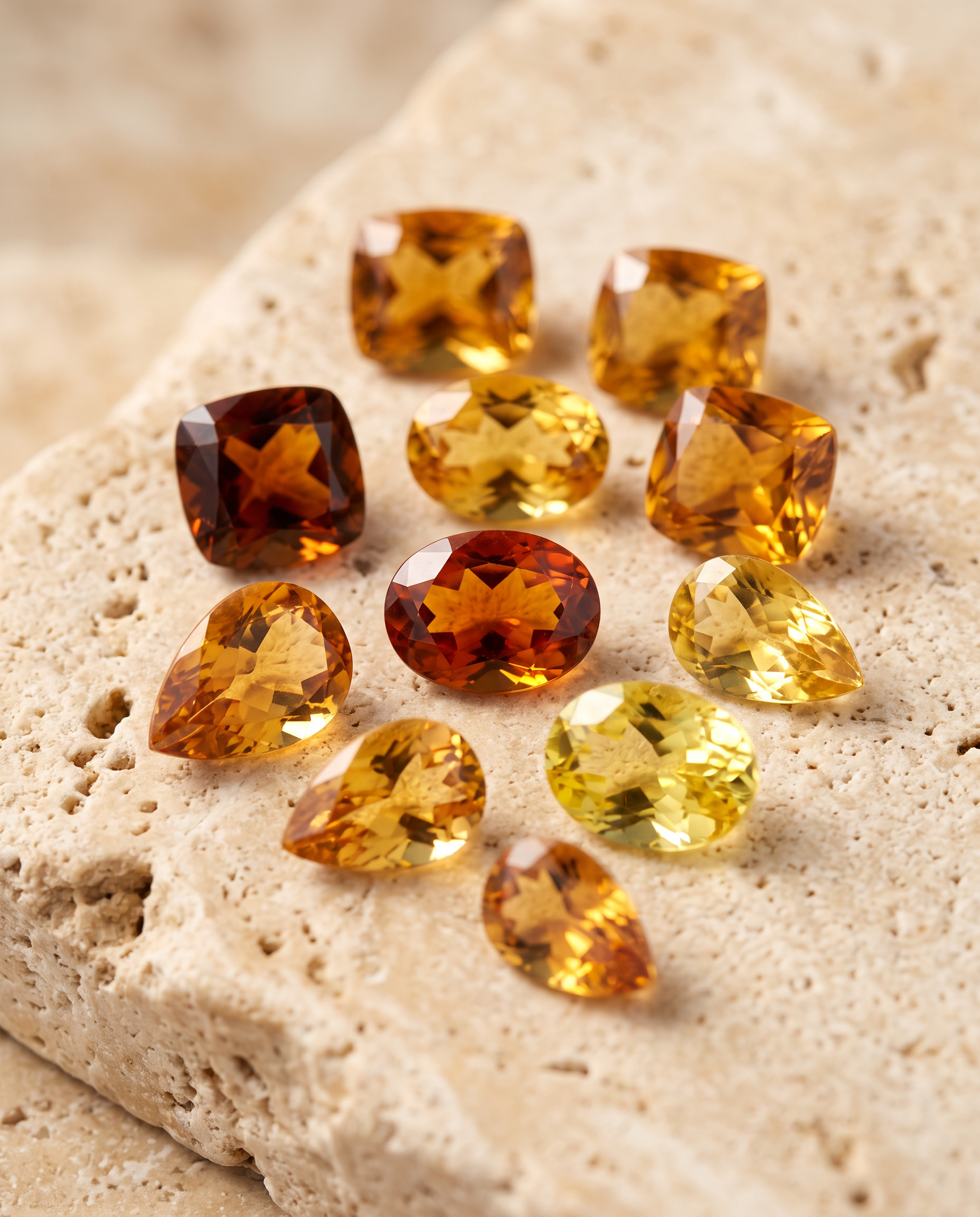
Representative natural color range
Long-tail gemstone guide
Is Citrine a good gemstone for a custom ring or fine-jewelry piece?
Citrine is quartz and is commonly sourced from Brazil · Bolivia · Madagascar. Its core color families include Lemon, Golden, Honey, Madeira, and Cognac. This range lets a custom piece feel personal: a client may prefer a quiet, low-saturation tone, a vivid collector color, or a more unusual pattern that changes how the stone reads beside gold or silver.
01
Which Citrine color should you choose for a custom ring?
Choose a citrine color by viewing it in normal daylight and indoor light, then consider how it changes beside the metal you intend to wear. Jewels Center groups citrine into Lemon, Golden, Honey, Madeira, and Cognac; each color family has a different mood and may appear lighter, darker, warmer, or cooler once set. A good selection holds your attention in ordinary light instead of relying on a single dramatic display condition.
02
How durable is Citrine for everyday jewelry?
Citrine has a Mohs hardness of 7. Mohs hardness measures resistance to scratching, but it does not fully predict resistance to chipping, heat, chemicals, or a sudden knock. Citrine is quartz with a Mohs hardness of 7 and is a practical choice for regular wear when protected from hard knocks. Avoid prolonged sunlight and abrupt temperature changes.
03
What should you ask before buying a Citrine?
Before buying a citrine, ask for the exact gem identity, whether it is natural or laboratory-grown where relevant, any disclosed treatments, the dimensions and carat weight, and any independent report that accompanies the stone. Seek a clear golden, honey, or Madeira tone that remains bright rather than brown or muddy in normal light. Ask whether the color is natural or heat-related, because both naturally occurring and treated material are sold as citrine.
04
How does Citrine compare with yellow sapphire and golden topaz?
Citrine should be compared with yellow sapphire and golden topaz through more than color alone. Mineral identity, hardness, refractive appearance, inclusions, treatment history, and the way a stone performs in normal light all matter. A reliable identification or origin conclusion requires an experienced gemologist and, where appropriate, an independent laboratory report; home tests and photographs cannot authenticate a gemstone.
The color explorer
Which citrine color is right for your piece?
Open each natural color family to understand its visible character. Color, saturation, inclusions, and cut vary from stone to stone, so use this guide as a starting point for a one-to-one sourcing conversation.
Lemon Citrine
Fresh, bright citrus yellow.
Before you source
How do you choose a citrine with confidence?
- 01.Choose the citrine color family you are drawn to before comparing small technical differences.
- 02.View the stone in more than one ordinary light source and beside the metal planned for the final setting.
- 03.Confirm treatment, identity, and report information in writing before a final purchase decision.
- 04.Select a setting that protects the citrine according to its hardness, cut, and the wearer's routine.
Frequently asked questions
Can Citrine be worn every day?
Citrine is quartz with a Mohs hardness of 7 and is a practical choice for regular wear when protected from hard knocks. Keep the piece away from heavy exercise, harsh chemicals, and tasks where a ring may receive a direct impact.
How can you tell if a Citrine is real?
A qualified gemologist can identify citrine using professional examination and, when needed, laboratory testing. Do not rely on scratch tests, heat, acids, or internet photos because those methods can damage jewelry and cannot confirm identity or treatment.
Does Citrine need a laboratory report?
A report is especially helpful for an important citrine purchase, a rare color, a claimed origin, or a stone with treatment questions. It documents what was tested, but it should complement rather than replace your own view of the stone.
Commission note
Source a citrine with a considered setting.
[Jewels Center gemologist note placeholder: record the selected citrine color, treatment disclosure, metal choice, and protective setting decision for this commission.]